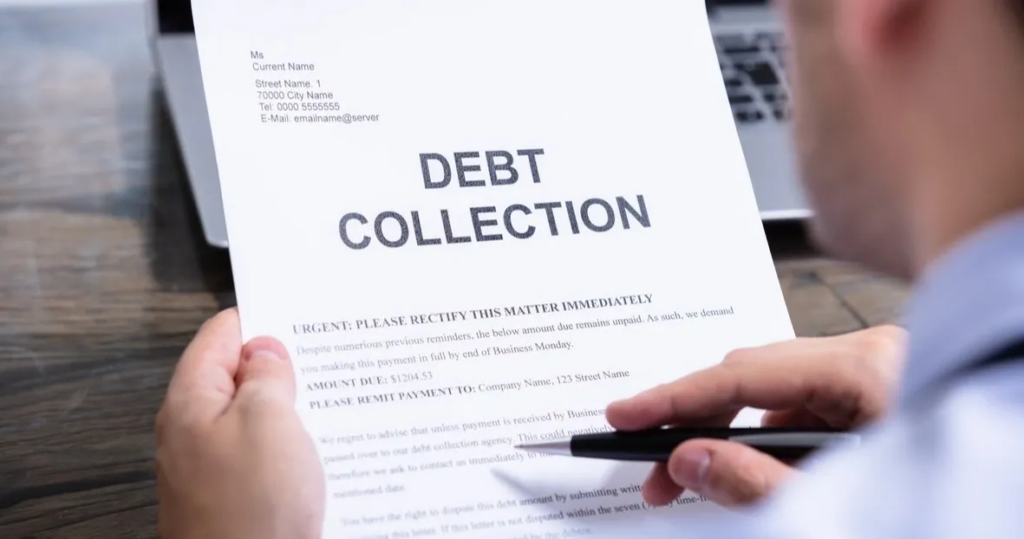
Receiving a call from a debt collector, on its own, can be a very stressful experience. Even more stress is created when the legitimacy of the debt collector is put into question. Afterall, you could be faced with serious consequences if you discover you provided your personal financial information to scammers instead of actual debt collectors. The following tips will help you determine the authenticity of debt collectors and what to do if the caller is suspected to be a scammer.
Key Indications of Fake Debt Collector Calls
1. The supposed collector on the phone is not providing identifying information such as a phone number or mailing address when asked.
2. The “collector” is requesting that you provide them with private information related to your personal finances.
3. The “collector” is not forthcoming about specific details regarding the debt that you owe.
4. The “collector is claiming that you owe a debt that you are unaware of.
5. The “collector” makes intimidating statements regarding legal actions they may take if the debt is not paid.
How to Deal With Scam Calls
If you have any suspicions that the “debt collector” you are talking to is not legitimate, the following tips should be followed to avoid being scammed.
1. Request the collector to provide key identifying information that proves they are legitimate. The information that should be asked for includes:
a. Their name
b. A phone number
c. The name of the company they work for
d. The number of their professional license
e. The address of their company.
If they are unable to fulfill your requests, hang up.
2. Never provide any private financial or personal details over the phone unless you are certain that the collector you are talking to is legitimate.
3. Request the collector to provide you with a “validation notice.” This is a written document that includes details regarding the debt that you owe, who you owe it to, and a list of your rights. Let the collector know that no more contact will be made over the phone unless a validation notice is provided.
4. File a formal grievance to the CFPB about the scam caller through their website consumerfinance.gov/complaint/ or by calling (855) 411-CFPB (2372).
5. Communicate with personal creditors about the “collectors” who have been calling you. Your creditors will be able to provide information regarding who they have permitted to contact you to inquire about potential debts.
6. If all the previously mentioned tips are ineffective, you are legally able to send collectors a letter that insists that they refrain from contacting you. Collectors who receive these written letters are lawfully required to abide by your requests. It is important to keep in mind that sending such letters to legitimate collectors will not erase any potential debts you owe. Collectors may still be able to sue you or provide your debt information to companies that report credit.
Progressive Debt Relief Is Here to Help
Here at Progressive Debt Relief, we know that having to deal with paying off debts and managing calls from debt collectors is a complicated and stressful experience, especially if the legitimacy of the calls is uncertain. That’s why, for over a decade, Progressive Debt Relief have been providing our clients with beneficial services that focus on settling all of your debt related issues as efficiently and effectively as possible. Our client-first mentality is why we offer free consultations and no upfront fees.
Our team of debt consolidation experts are dedicated to alleviating your debt-related stress by personally negotiating with your creditors. For more information about our debt relief services, as well as how to schedule a free consultation, visit the free consultation page of our website or call us at 1-877-590-1847.
We use essential cookies to make our site work. With your consent, we may also use non-essential cookies to improve user experience and analyze website traffic. We use cookies to help us collect and use information about your interactions with our website. By clicking "Accept All," you agree to our website's cookie use as described in our Privacy Policy. You can decline non-essential cookies by clicking "Reject All." You can change your non-essential cookie settings at any time by clicking "Preferences."
Cookie Preferences
Manage your cookie preferences below:
Essential cookies enable basic functions and are necessary for the proper function of the website.
Name
Description
Duration
sdui_panel_minimized
Stores a temporary preference indicating whether a user interface panel or toolbar has been collapsed/minimized to save screen space.
Session
sdui_panel_open
Stores a temporary preference indicating whether a specific admin panel or inspector drawer is currently expanded/open in the site's back-end interface.
Session
Cookie Preferences
This cookie is used to store the user's cookie consent preferences.
30 days
_tccl_visitor
Stores a randomly generated visitor ID so GoDaddy's traffic tracking recognizes a returning visitor across sessions.
1 year
_tccl_visit
Stores a randomly generated ID for the current visit so page views and clicks can be grouped into one session.
30 minutes
CloudFlare provides web performance and security solutions, enhancing site speed and protecting against threats.
The cf_ob_info cookie provides information on: The HTTP Status Code returned by the origin web server. The Ray ID of the original failed request. The data center serving the traffic
session
__cflb
When enabling session affinity with Cloudflare Load Balancer, Cloudflare sets a __cflb cookie with a unique value on the first response to the requesting client. Cloudflare routes future requests to the same origin, optimizing network resource usage. In the event of a failover, Cloudflare sets a new __cflb cookie to direct future requests to the failover pool.
session
__cfseq
Sequence rules uses cookies to track the order of requests a user has made and the time between requests and makes them available via Cloudflare Rules. This allows you to write rules that match valid or invalid sequences. The specific cookies used to validate sequences are called sequence cookies.
session
cf_clearance
Whether a CAPTCHA or Javascript challenge has been solved.
session
_cfuvid
The _cfuvid cookie is only set when a site uses this option in a Rate Limiting Rule, and is only used to allow the Cloudflare WAF to distinguish individual users who share the same IP address.
session
__cf_bm
Cloudflare's bot products identify and mitigate automated traffic to protect your site from bad bots. Cloudflare places the __cf_bm cookie on End User devices that access Customer sites that are protected by Bot Management or Bot Fight Mode. The __cf_bm cookie is necessary for the proper functioning of these bot solutions.
session
__cfruid
Used by the content network, Cloudflare, to identify trusted web traffic.
session
cf_chl_rc_m
These cookies are for internal use which allows Cloudflare to identify production issues on clients.
session
cf_chl_rc_ni
These cookies are for internal use which allows Cloudflare to identify production issues on clients.
session
cf_chl_rc_i
These cookies are for internal use which allows Cloudflare to identify production issues on clients.
session
__cfwaitingroom
The __cfwaitingroom cookie is only used to track visitors that access a waiting room enabled host and path combination for a zone. Visitors using a browser that does not accept cookies cannot visit the host and path combination while the waiting room is active.
session
cf_use_ob
The cf_use_ob cookie informs Cloudflare to fetch the requested resource from the Always Online cache on the designated port. Applicable values are: 0, 80, and 443. The cf_ob_info and cf_use_ob cookies are persistent cookies that expire after 30 seconds.
session
These cookies are needed for adding comments on this website.
Name
Description
Duration
comment_author_url
Used to track the user across multiple sessions.
Session
comment_author
Used to track the user across multiple sessions.
Session
comment_author_email
Used to track the user across multiple sessions.
Session
Statistics cookies collect information anonymously. This information helps us understand how visitors use our website.